Built Hot. Runs Even. Trusted in the Lab.
Chamber Furnaces for Every Lab, Heat-Treat Shop and Production Line
Heavy-duty chamber furnaces for production heat-treat shops, metallurgy and QA labs, research and university labs, and dental and ceramics workshops. Even heat from first ramp to final soak: three element classes cover work up to about 1800 °C.
How it works
What a chamber furnace is
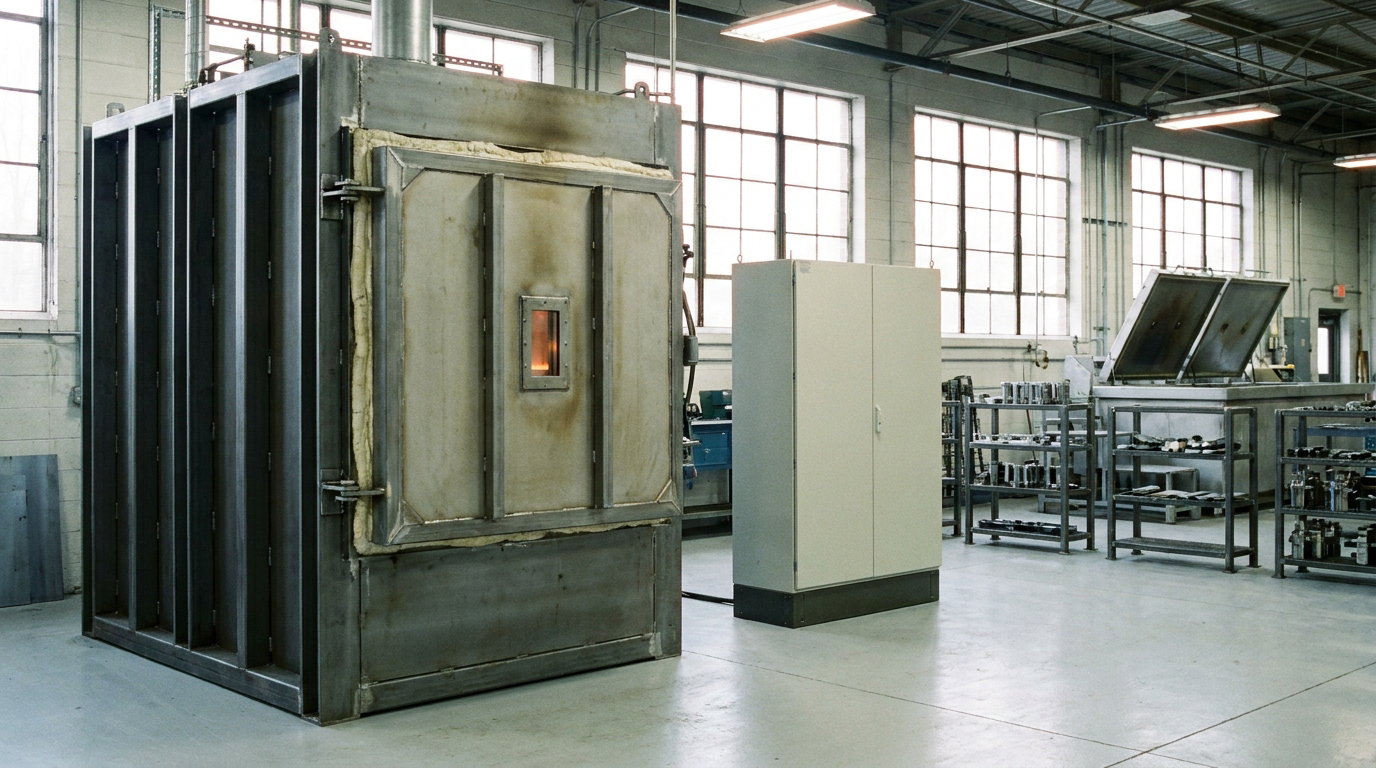
A chamber furnace is a box-type, electrically heated, high-temperature furnace. The load goes into an insulated chamber through a front door, a lift door or a moving hearth, heating elements bring the chamber to temperature, and a controller holds it there or steps it through a programmed cycle of ramps and soaks.
That simple layout makes it the general-purpose batch furnace of labs and heat-treat shops alike. The same basic design, scaled from a benchtop unit to a floor-standing production furnace and fitted with the right elements, insulation and atmosphere, covers everything from ashing a food sample to sintering a zirconia crown or hardening a die block.
| Process | What the furnace does |
|---|---|
| Annealing and stress relieving | Heat, hold and cool slowly to soften metal, restore ductility or relieve stresses from machining and forming. The temperature depends entirely on the alloy and the result required. |
| Hardening | Heat steel to its hardening temperature, typically somewhere around 800 to 1200 °C depending on the grade, hold until it is through-heated, then quench. Higher-alloy tool steels sit at the top of that range. |
| Tempering | Reheat hardened steel to a lower temperature, often in the range of about 150 to 650 °C, to trade some hardness for toughness. Long, even soaks matter more than peak temperature. |
| Ashing and loss on ignition | Burn off the organic fraction of a sample to weigh what remains. Many organic materials are ashed at about 500 to 600 °C; some loss-on-ignition methods run hotter. Good exhaust is essential. |
| Debinding and sintering | Slowly burn out binder from pressed, molded or printed green parts, then sinter them to density. Technical ceramics such as zirconia and alumina typically sinter at about 1400 to 1700 °C. |
| Firing ceramics and glass | Bisque and glaze firings, glass fusing and slumping, and enamel work all depend on controlled ramps. Glass work generally runs well below 1000 °C, while ceramic glaze firings can reach about 1300 °C. |
| Materials testing | Oxidation and thermal aging tests, thermal cycling, heat-treat trials on test coupons, and preparing samples for hardness and microstructure checks in metallurgy and QA labs. |
Chamber and hearth
The insulated box the load sits in, with a hearth plate or setters that carry parts and spread their weight. The usable work zone, where the rated uniformity applies, sits inside the chamber with clearance on every side.
Heating elements
Wire, silicon carbide or molybdenum disilicide elements line the walls, roof or floor. The element family sets the realistic maximum temperature and, with the chamber layout, how evenly heat reaches the load.
Insulation and door
Ceramic fiber, refractory brick or a combination keeps the heat in and the case cool. The door, swing, lift or moving hearth, carries its own insulated plug and seal so the chamber stays even when closed.
Controller and safety
A programmable controller runs ramps and soaks against a thermocouple in the chamber, while an independent over-temperature limit and, on many designs, a door switch protect the furnace, the load and the operator.
Chamber furnace types
Benchtop, floor-standing, muffle, retort, lift-door and bottom-loading
Every chamber furnace heats a load inside an insulated box. They differ in size, in how the elements meet the chamber, in the atmosphere they can hold, and in how the load goes in and comes out.
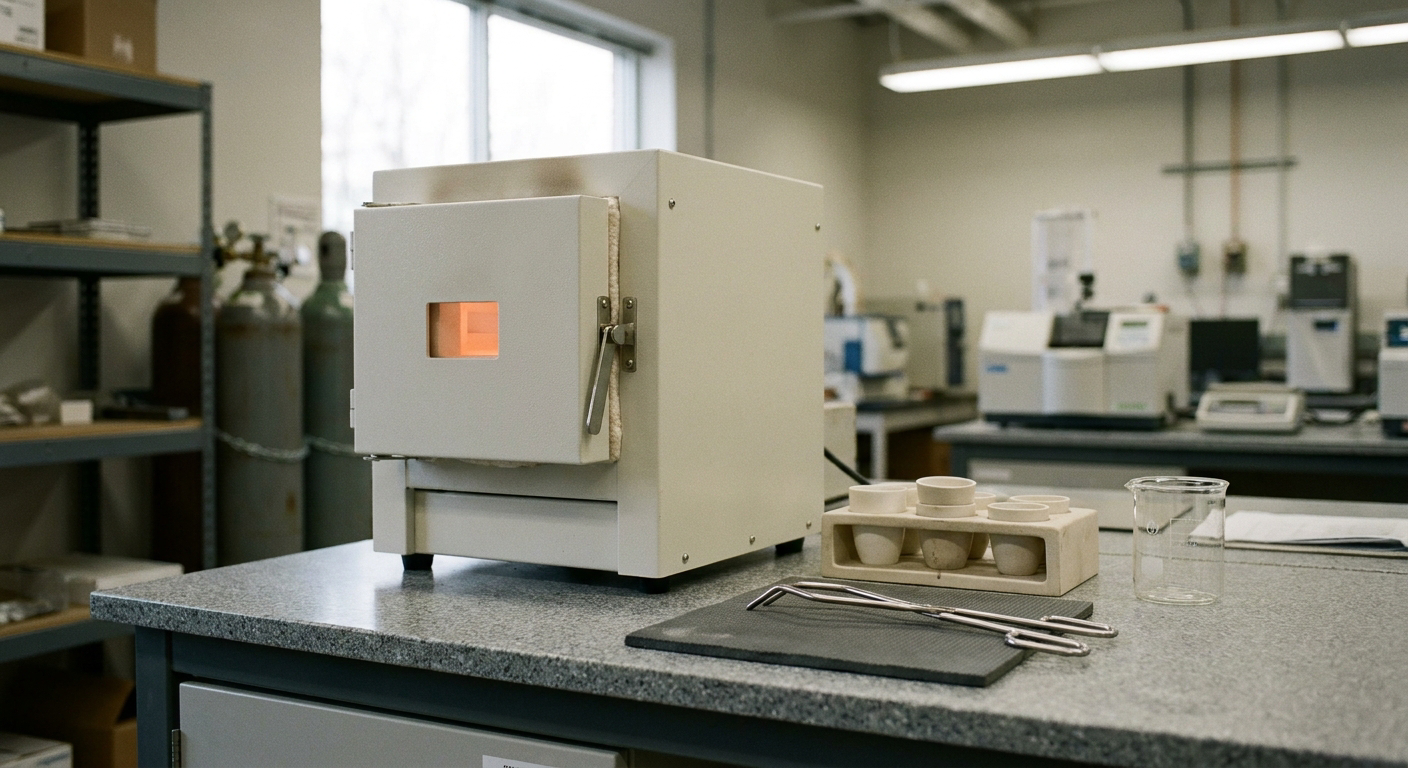
Benchtop and lab chamber furnaces
Compact chamber furnaces with a usable volume from well under a liter up to a few tens of liters, sized to sit on a lab bench. They handle ashing, small-batch heat treating, sample preparation, crucible work and research firing, and smaller units often run from a standard power supply.
- Fast heat-up and cool-down, especially with ceramic fiber insulation.
- Available across all three temperature classes, up to about 1800 °C.
- Swing-door and lift-door versions for loading with tongs.
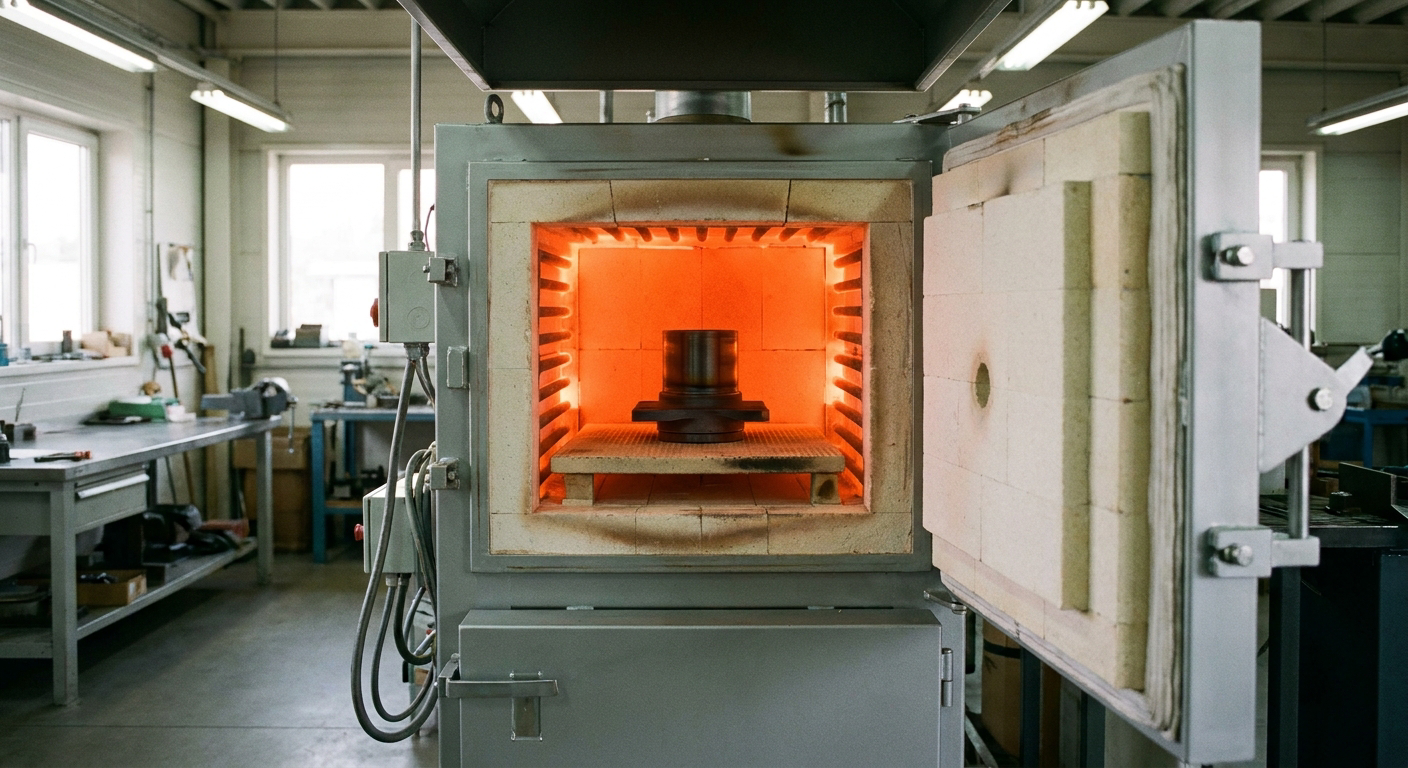
Floor-standing industrial chamber furnaces
Larger chamber furnaces on their own stands or frames, built for production batches, heavy parts and long holds. They pair bigger chambers with heavier hearths, more heating zones for uniformity, and the controls and recording that production and regulated heat-treat work call for.
- Heavier hearths and charging aids for loads handled by fork or crane.
- Multiple control zones where tight uniformity is specified.
- Usually need a dedicated, often three-phase, power supply.
Muffle versus direct-heated
A muffle design separates the load from the elements with an inner enclosure or plate, which shields elements from fumes and the load from direct radiation. Direct-heated chambers expose the elements, which typically heats faster and reaches higher temperatures.
Air versus inert-atmosphere retorts
Standard chambers fire in air. For low-oxidation work, a gas-tight retort or inner box with sealed door, flow meters and a controlled outlet holds nitrogen or argon around the load. A simple gas inlet in an air furnace reduces scale but does not make the chamber gas-tight.
Lift-door chambers
The door rises vertically on a counterweight or actuator, keeping its hot face up and away from the operator. Well suited to frequent loading and unloading of hot parts with tongs or a charging fork.
Bottom-loading (elevator hearth)
The hearth lowers out of the chamber so loads can be placed from the side, then rises back into a closed chamber. Useful for heavy, tall or delicate loads, and the enclosed top helps hold heat and uniformity.
Temperature classes
The heating element sets the ceiling
Chamber furnaces fall into three broad temperature classes, and each one follows from the heating element behind it. Pick the class from the highest temperature you will actually run, with a comfortable margin, then size and equip the furnace around it.
The ranges below are typical chamber temperatures. Exact limits depend on the element grade, the atmosphere and the furnace build, so the furnace's own rated maximum is the number that counts.
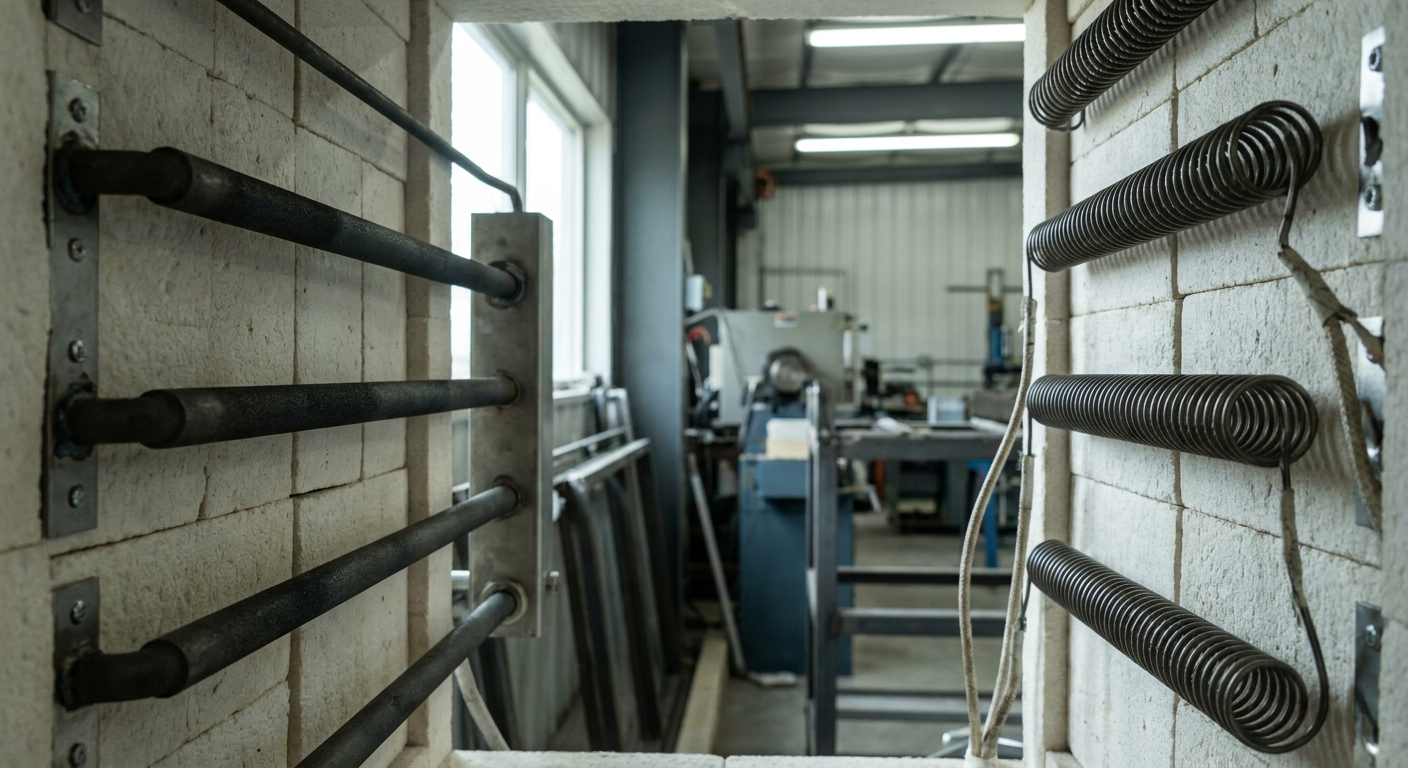
| Typical maximum | Heating element | Common work | Notes |
|---|---|---|---|
| Up to about 1100 to 1300 °C | Metallic wire (iron-chromium-aluminum or nickel-chromium alloys) | Annealing, hardening of many steels, tempering, ashing, glass and most ceramic firing, general lab work. | Economical and easy to replace. Coils sit in grooves or on supports in the insulation. |
| Up to about 1400 to 1500 °C | Silicon carbide (SiC) rods or spirals | High-temperature hardening, higher firing work, some sintering and materials testing. | Elements gradually rise in resistance with use, so the power supply needs headroom to compensate. |
| Up to about 1700 to 1800 °C | Molybdenum disilicide (MoSi2) hairpins | Sintering technical ceramics such as zirconia and alumina, research at the highest temperatures, dental zirconia. | Usually hang from the roof. Need controlled ramp rates and the furnace's specified atmosphere. |
Construction
Insulation, controls, uniformity and installation
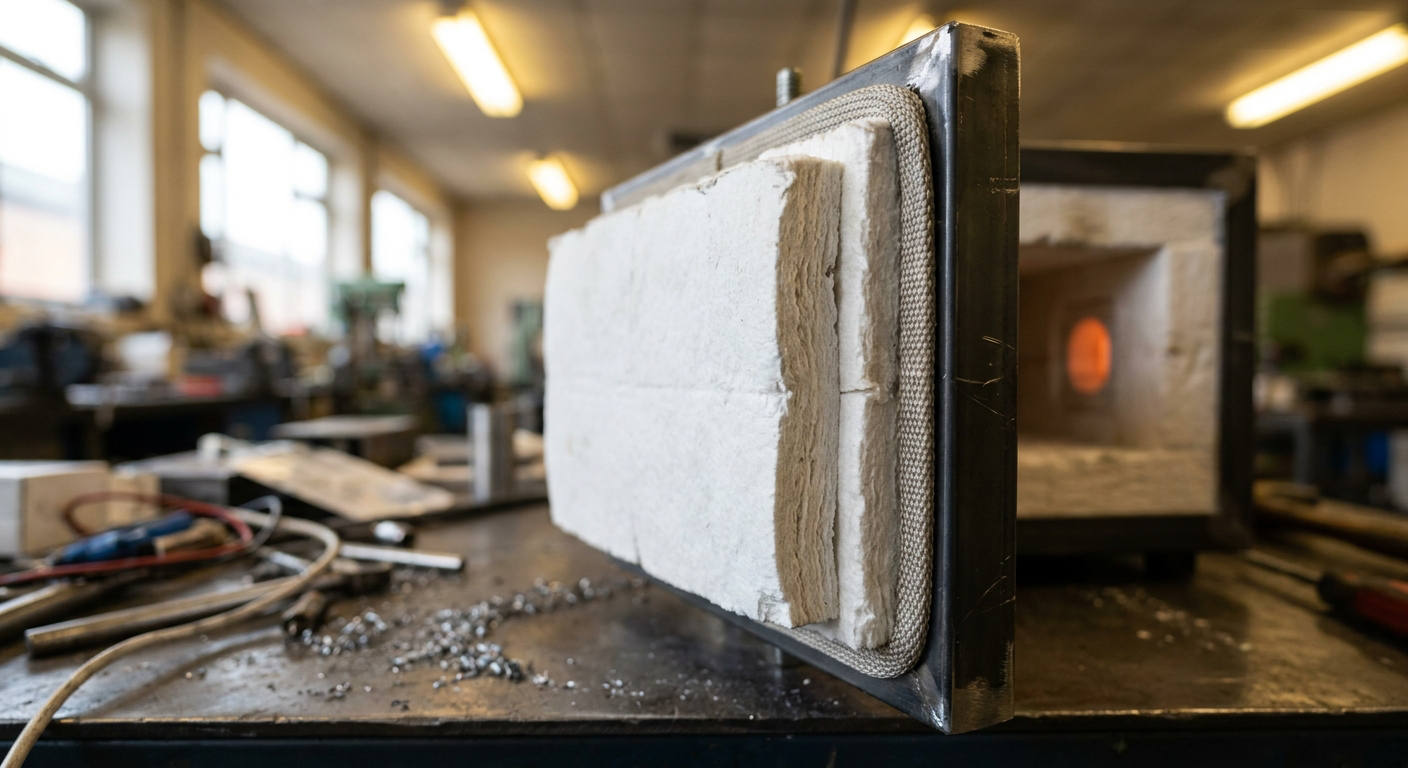
Ceramic fiber versus refractory brick
The lining decides how quickly the furnace cycles and how much abuse it takes. Many furnaces combine the two, with a brick or dense hearth plate under fiber walls and roof.
| Ceramic fiber | Refractory brick | |
|---|---|---|
| Heat-up and cool-down | Fast, low thermal mass | Slower, holds heat longer |
| Energy per cycle | Lower for short, frequent cycles | Higher to heat, steadier on long holds |
| Toughness | Softer, can be marked by careless loading | Resists abrasion, heavy loads and knocks |
| Typical home | Labs, frequent batch cycling | Production hearths, heavy or long-soak work |
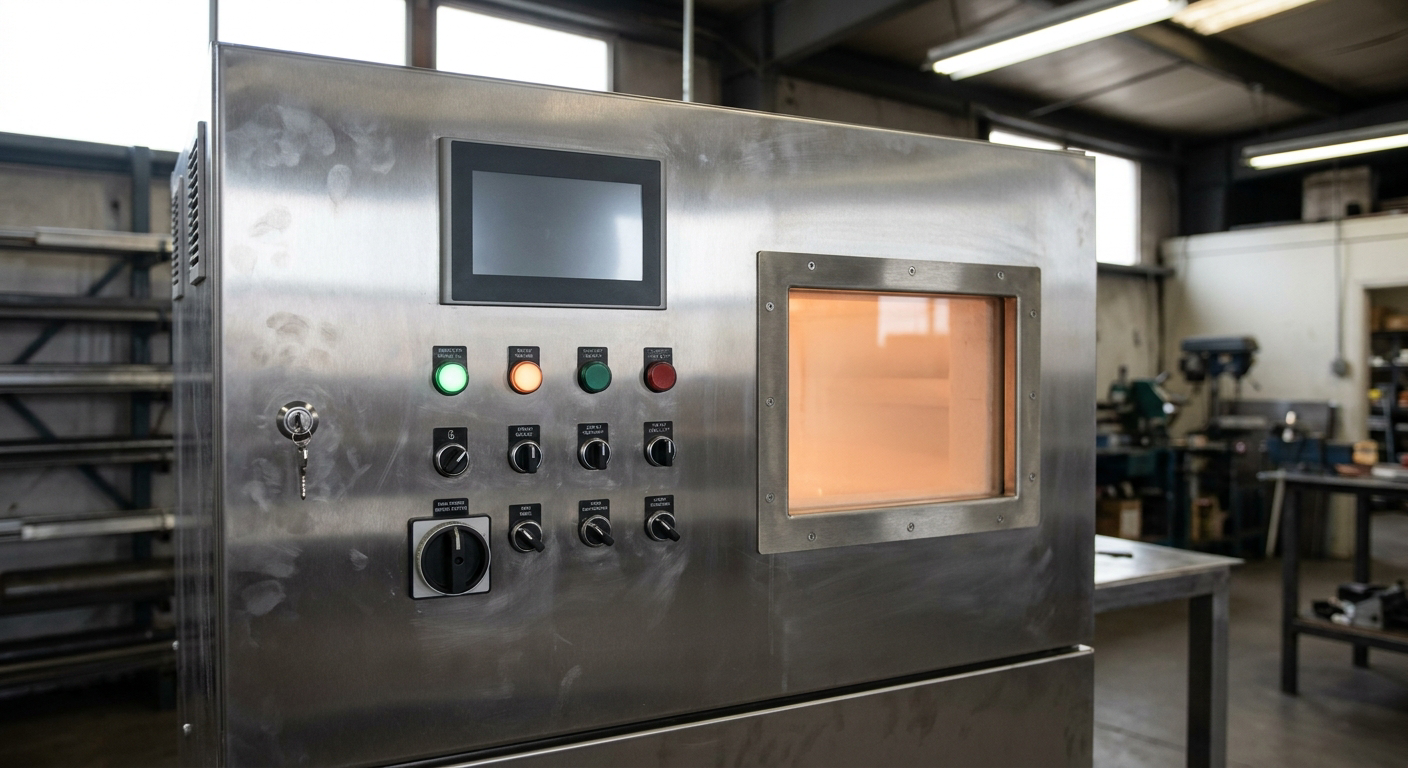
Controllers, ramps and soaks
A programmable controller turns a furnace into a repeatable process. It ramps the chamber at a set rate, soaks it for a set time and controls the cool-down, so ceramics do not crack, steel gets its full hold and every batch runs the same way.
- Multi-segment programs: ramp, soak, ramp again and controlled cooling.
- Stored programs and delayed start for overnight or repeat work.
- An independent over-temperature limit that cuts power if the main loop fails.
- Process data logging and, where specified, load thermocouple recording.
- Ramp-rate limits that protect ceramics, glass and the furnace lining.
Temperature uniformity and survey classes
Uniformity is checked with a temperature uniformity survey: calibrated thermocouples spread through the work zone are logged at a set temperature. Pyrometry specifications such as AMS 2750 group furnaces into classes by the tolerance they hold, so name any required class up front; it drives zoning, element layout and instrumentation.
Exhaust and debinding options
Ashing, binder burnout and other fume-producing work need a fresh-air inlet and an exhaust path, from a simple chimney to a fan-driven exhaust. For heavy binder loads, an afterburner or catalytic unit can treat the off-gas before it leaves the furnace.
Power and installation
Small benchtop units often run from standard single-phase power; larger and higher-temperature furnaces typically need a dedicated single-phase or three-phase circuit. Plan clearances, a non-combustible surface rated for the weight, ventilation and any process gas supply before delivery.
Safety features
Look for an independent over-temperature cutout, a door switch that cuts element power on opening where the design provides one, a cool-touch case, and clear venting guidance. Operators need heat-resistant gloves, a face shield and long tongs for hot loading.
Selection guide
How to choose a chamber furnace
Get the temperature class, the work zone and the atmosphere right and the rest of the specification follows. Get one of them wrong and the furnace either cannot do the job or wears out early doing it.
| Item | What to check |
|---|---|
| Working and maximum temperature | Choose a rated maximum comfortably above the highest temperature you will actually run. That margin decides the element family and extends element and insulation life. |
| Chamber size and usable work zone | Size to the largest real load including trays, setters and fixtures, with clearance on every side. Ask for both the inside dimensions and the usable work zone where the uniformity figure applies. |
| Load weight and hearth | Check the hearth load rating for heavy parts, and how loads will go in and out: by hand with tongs, by charging fork, or on a moving hearth. |
| Atmosphere | Air is standard. Reduced scale needs an inert gas inlet; true low-oxygen work needs a sealed retort. Flammable gases call for a furnace designed and rated for them. |
| Heating and cooling rates | Fiber-lined chambers cycle faster; brick-lined chambers hold heat. If you need faster cooling, ask about cooling fans or door-cracking programs and whether the load tolerates them. |
| Uniformity requirement | State any survey class or tolerance your customer or quality system requires. Tighter uniformity usually means more control zones and more instrumentation. |
| Exhaust and fumes | Ashing, debinding and some firing work produce smoke and vapors. Confirm the inlet, exhaust and any off-gas treatment before the furnace is ordered, not after it is installed. |
| Door and loading style | Swing door for simple lab use, lift door for frequent hot loading, bottom loading for heavy or delicate parts. Match it to how often you open the furnace and how you handle hot loads. |
| Power supply | Check voltage, phase and current against what is available at the install point. Upgrading a supply after delivery is slow and costly. |
| Controls and recording | Decide how many programs and segments you need, whether data must be logged or exported, and whether load thermocouples are required for your procedure. |
Applications
Where chamber furnaces work
Any batch process that needs a load held at a controlled high temperature, in air or a protective gas, is a candidate for a chamber furnace.
Production heat-treat shops
Batch hardening, tempering, annealing, normalizing and stress relieving of tools, dies and machined parts. Floor-standing chambers with heavy hearths, lift doors and recorded cycles suit repeat production work.
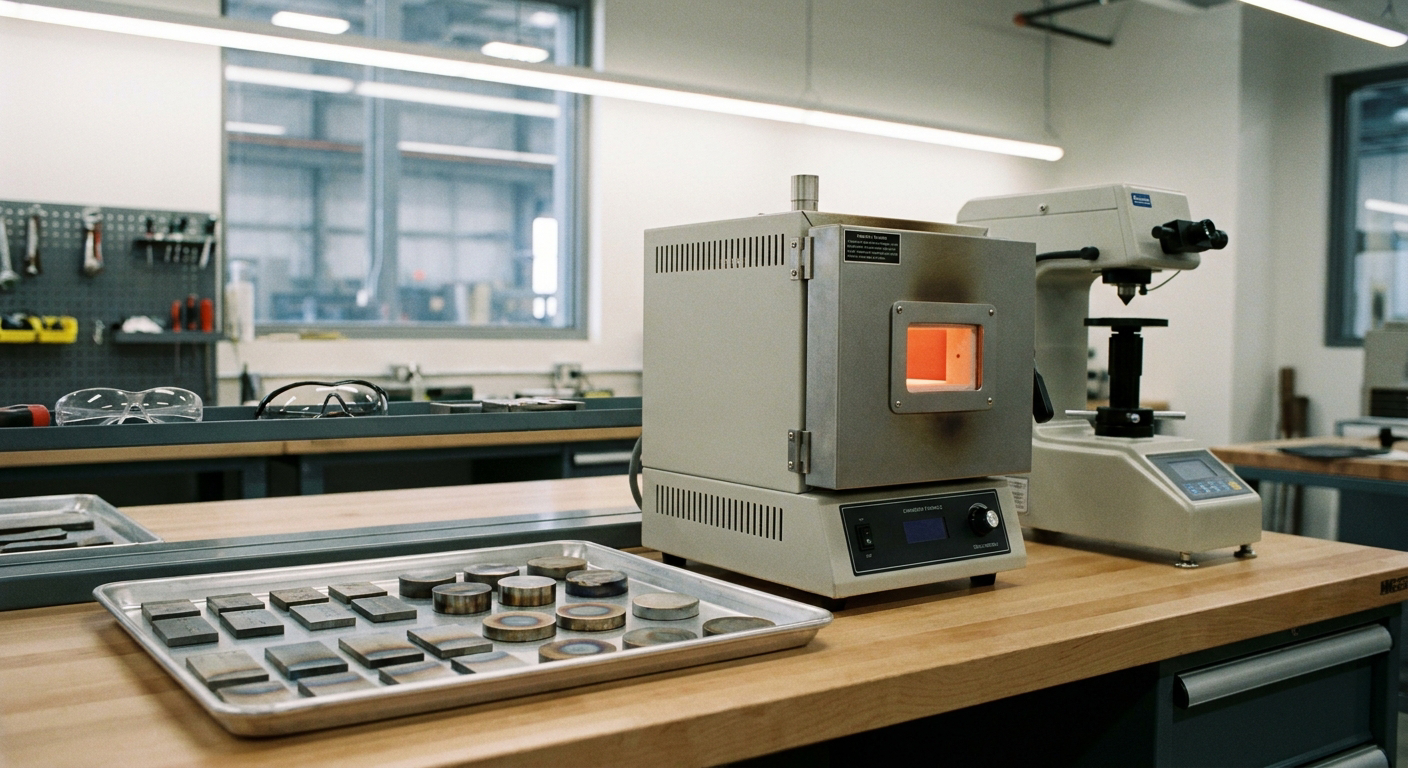
Metallurgy and QA labs
Heat-treat trials on test coupons, verifying a supplier's process, and preparing samples for hardness and microstructure checks. Benchtop chambers with good uniformity and logging are the norm.
Research and university labs
Materials research, solid-state synthesis, oxidation and aging studies, and teaching labs. Researchers often need the higher temperature classes, programmable cooling and, for some work, an inert-atmosphere retort.
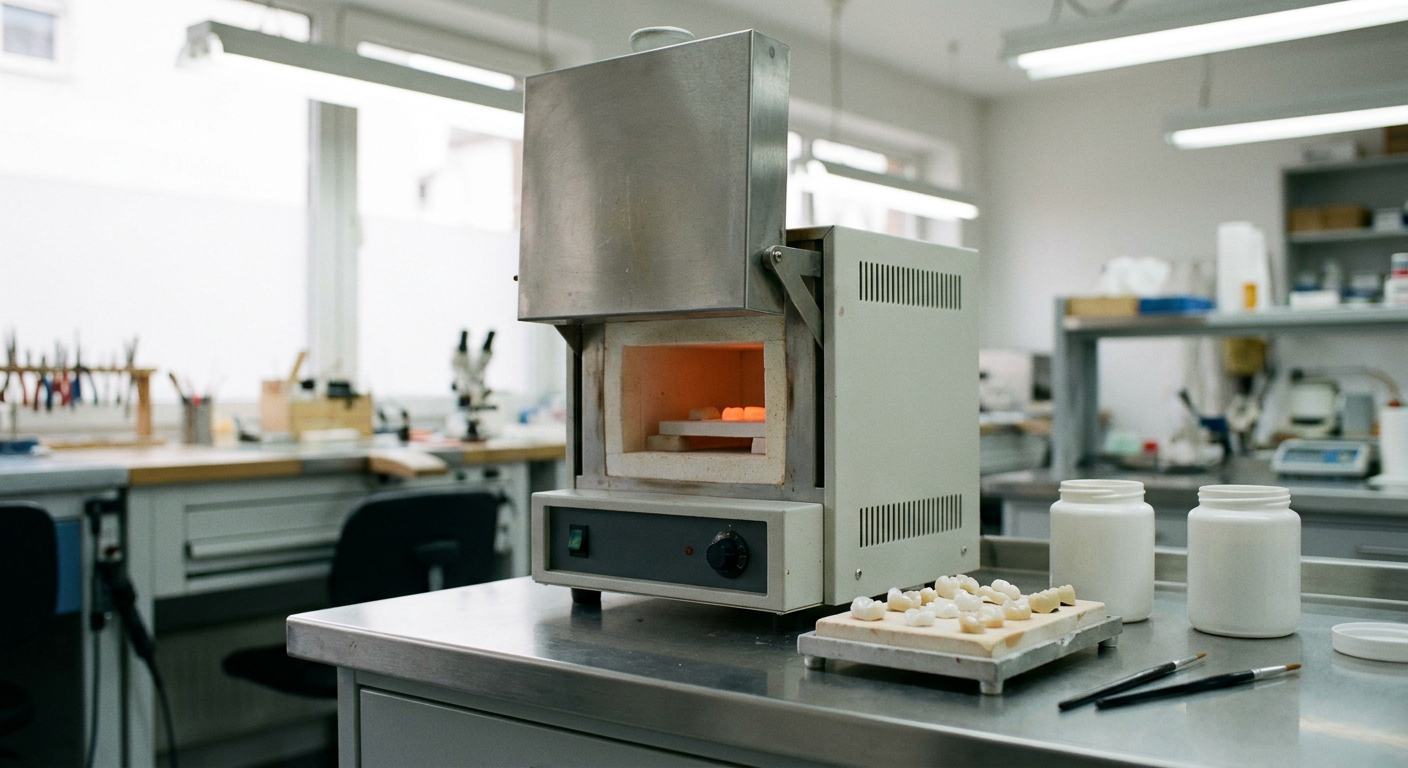
Dental and ceramics workshops
Dental labs use compact high-temperature chambers, often with lift-up hoods, to sinter zirconia restorations. Ceramics and glass workshops use programmable chambers for bisque, glaze, fusing and slumping.
Analytical and environmental labs
Ashing and loss-on-ignition testing of foods, feeds, soils, coal, polymers and other samples. A dedicated ashing furnace with a strong exhaust keeps fumes away from elements and staff.
Powder metallurgy and additive manufacturing
Debinding and sintering of pressed, metal injection molded and 3D-printed green parts, where exhaust for binder burnout and, for many metals, a protective atmosphere are part of the specification.
Side by side
Chamber furnaces, tube furnaces and lab ovens
Three tools that get confused in purchasing requests. The right one depends on the temperature, the shape of the load and how tightly the atmosphere has to be controlled.
| Chamber furnace | Tube furnace | Lab oven | |
|---|---|---|---|
| Typical temperatures | About 1100 to 1800 °C, by element class. | Similar high-temperature classes. | Usually a few hundred °C at most. |
| Load shape | Bulky parts, trays, crucibles and batches. | Small samples that fit inside a work tube. | Shelves of samples, glassware and parts. |
| Atmosphere control | Air as standard; inert gas with a sealed retort. | Sealed tube makes gas flow and vacuum simpler. | Air, sometimes with inert gas or vacuum models. |
| Typical work | Heat treating, ashing, sintering, firing, testing. | Controlled-atmosphere synthesis and annealing. | Drying, curing and low-temperature conditioning. |
Good practice
Get long life and repeatable results
Most early element failures and inconsistent batches trace back to a handful of habits. These are the ones worth building into the procedure.
- Run below the rated maximum where you can; holding at the limit shortens element and insulation life.
- Keep a clean chamber: spills, glazes and residues attack elements and the hearth.
- Use setters or trays rather than placing parts straight on the hearth, and keep loads clear of elements and thermocouples.
- Respect ramp rates for ceramics, glass and the furnace lining itself, particularly on the first heat of a new furnace.
- Vent fume-producing work exactly as the furnace is designed to be vented.
- Have the control thermocouple and controller checked or calibrated on the schedule your quality system requires.
Information only. The guidance on this page is general and educational. It is not engineering, metallurgical or safety advice and does not replace the manufacturer's instructions, your process specification, applicable standards, or a qualified professional. Verify all information before relying on it. Read the full disclaimer.
FAQ
Chamber furnace questions
What is a chamber furnace?
A chamber furnace is a box-shaped, electrically heated, high-temperature furnace with an insulated chamber that is loaded through a front door, a lift door or a moving hearth. Heating elements line the walls, roof or floor of the chamber, a controller holds the set temperature and runs programmed ramps and soaks, and the load sits on the hearth or on trays and setters. Chamber furnaces are the general-purpose workhorse for batch heat treating, annealing, hardening, tempering, ashing, sintering, debinding, firing ceramics and glass, and materials testing, from small benchtop lab units to floor-standing industrial furnaces.
What is the difference between a chamber furnace and a muffle furnace?
The terms overlap and are often used interchangeably, especially for laboratory units. Strictly, a muffle furnace has a muffle: an inner enclosure, traditionally ceramic or metal, that separates the load from the heating elements, which protects the elements from fumes and the load from direct element radiation. A direct-heated chamber furnace has elements exposed to the chamber, which typically gives faster heat-up and higher maximum temperatures. Many modern electric lab furnaces sold as muffle furnaces are chamber furnaces with elements embedded in or behind the insulation, so check how the elements are actually arranged rather than relying on the name.
What maximum temperature should my chamber furnace have?
Choose a rated maximum comfortably above the highest temperature you actually need to run. Elements and insulation last longer when the furnace is not held at its absolute maximum for long periods, and the margin gives you headroom for future work. As a rough guide, many steel heat-treating, annealing, ashing and glass jobs fit a wire-element furnace rated around 1100 to 1300 °C; high-temperature hardening of some tool steels and higher firing work may call for a silicon carbide furnace rated around 1400 to 1500 °C; and sintering of technical ceramics such as zirconia and alumina typically needs a molybdenum disilicide furnace rated around 1600 to 1800 °C. Always confirm the required temperature with your material supplier or process specification.
Which heating elements are used, and how hot can each go?
Three element families cover most chamber furnaces. Metallic wire elements, usually iron-chromium-aluminum or nickel-chromium alloys coiled into grooves or onto supports, typically reach chamber temperatures of about 1100 to 1300 °C and are economical and easy to replace. Silicon carbide (SiC) rod or spiral elements typically reach about 1400 to 1500 °C. Molybdenum disilicide (MoSi2) elements, usually U-shaped hairpins hanging from the roof, typically reach about 1700 to 1800 °C. Exact limits depend on the element grade, the atmosphere and how the furnace is built, so the furnace's rated maximum is the number that counts.
Is ceramic fiber or refractory brick insulation better?
Each suits a different duty. Ceramic fiber (board, module or vacuum-formed shapes) has low thermal mass, so the furnace heats up and cools down faster and uses less energy per cycle, which suits labs and frequent batch cycling. It is softer and can be marked by careless loading. Refractory and insulating firebrick has more thermal mass and is tougher against abrasion, heavy loads and spills, which suits production work and long holds, at the cost of slower heating and cooling. Many furnaces combine the two, for example a brick or dense hearth plate under fiber walls and roof.
What does temperature uniformity mean, and what are survey classes?
Uniformity is how closely temperatures across the usable work zone agree with each other and with the setpoint. It is measured with a temperature uniformity survey: several calibrated thermocouples are placed through the work zone and logged while the furnace holds a set temperature. Aerospace and other regulated heat-treat work often follows a pyrometry specification such as AMS 2750, which groups furnaces into classes by the tolerance they can hold, from a few degrees either side of setpoint for the tightest class to several tens of degrees for the loosest. If your customer or quality system names a class, state it when you request a quote, because it affects the furnace design, the number of control zones and the instrumentation.
Can a chamber furnace run with an inert or protective atmosphere?
Yes, with the right construction. A standard air furnace with a simple gas inlet can flow nitrogen or argon to reduce oxidation and scaling, but the chamber is not gas-tight, so it will not reach a truly low-oxygen atmosphere. For bright annealing, oxidation-sensitive alloys or low-oxygen sintering, a sealed retort or inner box, gas-tight door seals, flow meters and a controlled gas outlet are used. Flammable process gases such as hydrogen or nitrogen-hydrogen mixtures need dedicated safety systems and should only be used in furnaces designed and rated for them.
What is debinding, and why does it need special exhaust?
Debinding is the slow, low-temperature step that removes the organic binder from pressed ceramics, metal injection molded parts and some 3D-printed green parts before they are sintered. As the binder burns out it releases smoke and vapors, which can foul the chamber, attack the elements and condense in ducts. Furnaces intended for debinding usually have a controlled fresh-air inlet, an exhaust chimney or fan, gentle programmed ramps and, in some cases, an afterburner or catalytic unit that treats the exhaust. Never run binder burnout in a sealed chamber without the venting the furnace was designed for.
What does a programmable controller add?
A programmable controller runs a multi-segment schedule automatically: ramp to a temperature at a set rate, soak (hold) for a set time, ramp again and cool at a controlled rate. That matters for ceramics and glass, where heating or cooling too fast can crack parts, and for heat treatments that call for specific hold times. Common features include stored programs, delayed start, process data logging, and an independent over-temperature limit that cuts power if the main control loop fails. Regulated work may also call for recording of chamber and load thermocouples.
What power and installation does a chamber furnace need?
Small benchtop furnaces often run from a standard single-phase supply, while larger and higher-temperature units typically need a dedicated single-phase or three-phase circuit sized to the nameplate current. Beyond power, plan for clearance around the case and over the top, a non-combustible bench or floor rated for the weight, ventilation or an exhaust connection where fumes or binders are involved, and a supply of process gas if you will use an inert atmosphere. Have a qualified electrician confirm the supply before the furnace arrives.
Swing door, lift door or bottom loading: which is best?
A side-hinged swing door is the simplest and most common on lab and small furnaces. A vertical lift door keeps the hot face of the door away from the operator and suits frequent loading with tongs or a charging fork. Bottom-loading (elevator-hearth) furnaces lower the hearth out of the chamber so heavy or delicate loads can be set in place from the side, and the closed top helps hold heat and uniformity. The right choice depends on load weight, how often you open the furnace and how you handle hot parts.
How do I size the chamber?
Start from the largest load you will fire, including trays, setters, baskets and fixtures, then leave clearance on every side so heat can reach the load evenly. The usable work zone, where the stated uniformity applies, is usually smaller than the chamber's inside dimensions, so ask for both figures. Also check the hearth load rating for heavy parts. An oversized furnace takes longer and more energy to heat, so buy for the realistic largest load rather than the largest chamber available.
Can one furnace handle both ashing and heat treating?
It can, but it is often better not to share one. Ashing and loss-on-ignition work burn off organic material and can leave residues and corrosive vapors that shorten element life and contaminate later loads, while heat-treating work may need a clean chamber or a protective atmosphere. Labs that do both regularly commonly keep a dedicated ashing furnace with good exhaust, or at least run a cleaning burn between the two kinds of work.
How long do heating elements last?
Element life varies widely with the element type, how close to the maximum temperature the furnace is run, how often it cycles, and the atmosphere and fumes it sees. Running well below the rated maximum and keeping the chamber clean of contaminants are the two biggest factors you control. Elements are consumable parts designed to be replaced, and some types age in predictable ways, for example silicon carbide elements gradually rise in resistance, so ask how elements are replaced and whether the power supply compensates for aging.
What safety features should a chamber furnace have?
Look for an independent over-temperature limit, a door switch that cuts power to the elements when the door opens (common, though not universal, on many designs), a case that stays at a safe touch temperature, and clear guidance on venting. Operators should use heat-resistant gloves, a face shield and long tongs when loading or unloading a hot chamber, and follow the manufacturer's instructions and site safety rules for fumes and process gases.
Request a quote
Get a chamber furnace quote
One benchtop unit for the lab or a floor-standing furnace for the shop floor. Tell us the process, the working temperature, the load and the atmosphere, and get a quote back.
- Benchtop, floor-standing, lift-door and bottom-loading chambers
- Wire, silicon carbide and molybdenum disilicide temperature classes
- Air, inert-atmosphere retort and debinding exhaust options